How Elisabeth Found Belonging and Became a Champion Through Wrestling
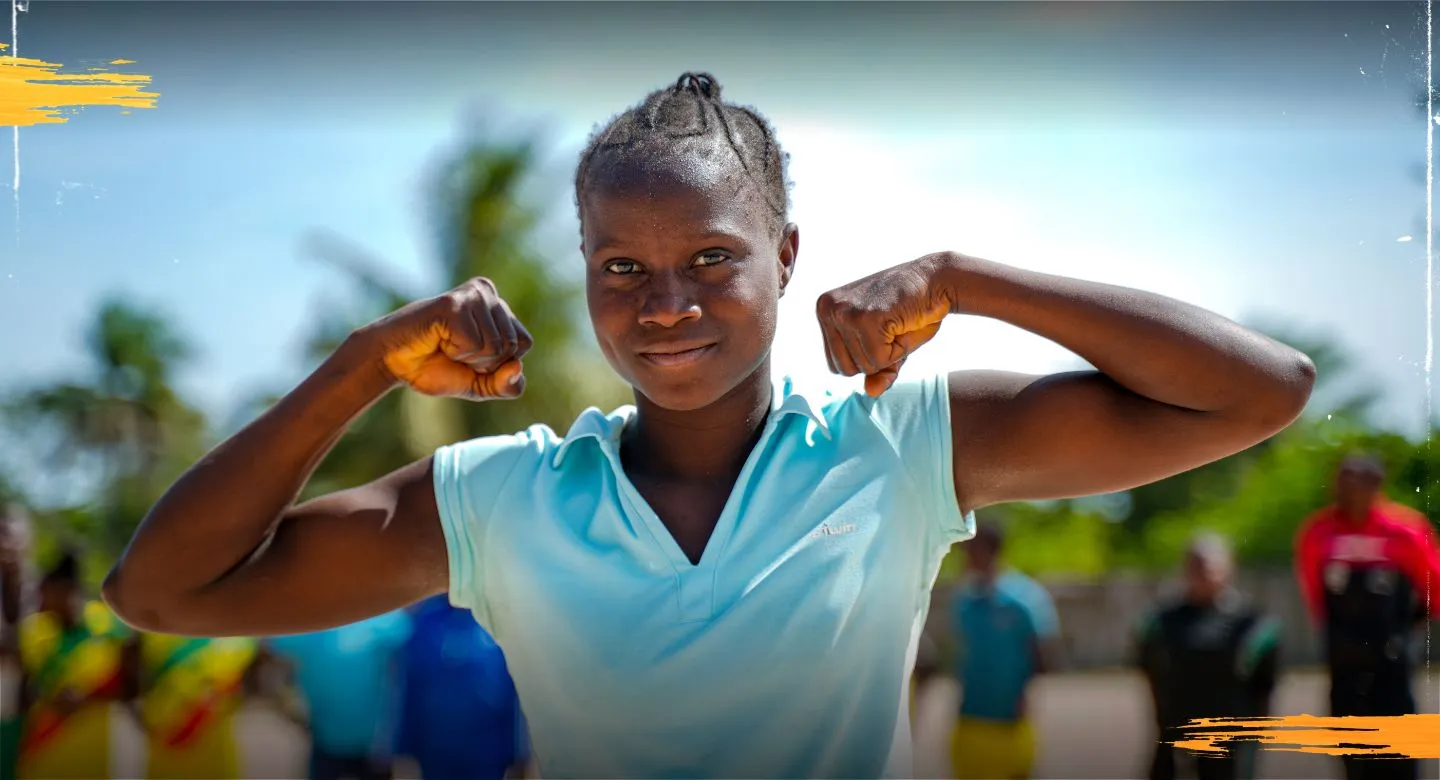
The late‑afternoon sun washes over the white sand of Oussouye as Elisabeth steps into the arena. Settling into her breath, she lowers her shoulders and prepares to move. Across from her, her opponent advances. Elisabeth lunges first — a grip, a pivot, a burst of force — and the sand sprays upward as she drives her opponent off balance, landing with a thud. Cheers erupt, “Champion!” ringing across the arena. Elisabeth rises, chest steady, eyes bright. At just 15, here on this sunlit sand, she feels rooted, strong, and unmistakably at home.
But belonging was not always certain for Elisabeth. She was born stateless in 2010 after her parents fled the 1998 conflict in Guinea‑Bissau, a war that displaced hundreds of thousands of people. She grew up without citizenship or official documents. Without legal status, opportunities were limited. As a girl, finding safe spaces to play and belong was even harder.
Building Strength In The Face Of Barriers
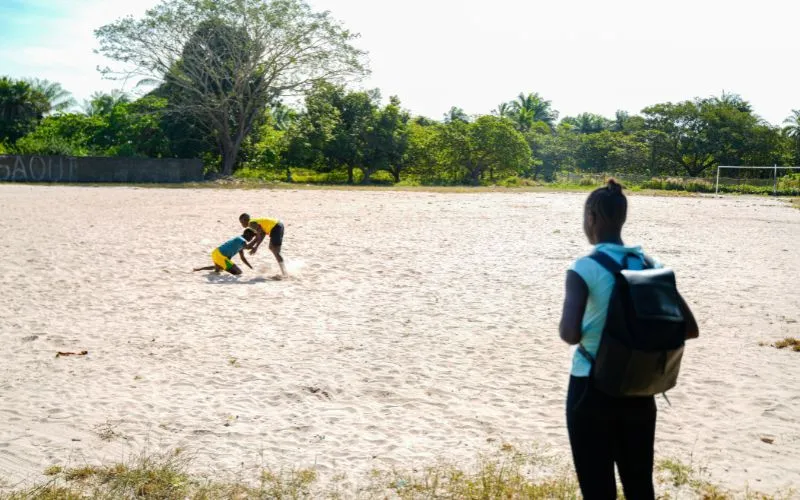
Elisabeth grew up between borders in Guinea-Bissau and Senegal. Without civil registration, she had to move to a village near the border to attend school. She admired the boys who wrestled in her community and joined boys in football and informal matches. But wrestling, many said, was not for girls. “They said wrestling would make me less of a woman,” Elisabeth remembers.
In Senegal, girls like Elisabeth continue to face barriers to participation in sport, including harmful gender norms and limited access to safe facilities. About three out of every ten girls are married before they turn eighteen, limiting education and participation in sport. A recent UNESCO brief notes that nearly half of girls drop out of sport in adolescence—far outpacing boys.
The Turning Point
Her journey changed when her older sister, Jeannine, joined a wrestling club supported through the Right To Play’s Renforcement des Capacités des Filles par le Sport et le Jeu (RECAF‑Jeu) project. It was funded by Global Affairs Canada through the Government of Canada and implemented by Right To Play with local partners. The project builds girls’ skills, trains coaches, and engages communities in Sédhiou and Ziguinchor so girls can play, build confidence, lead, and stay safe.
Jeannine later became a certified wrestling coach and encouraged Elisabeth to attend a capacity-building camp supported by Right To Play. For the first time, Elisabeth wrestled alongside other girls. She loved it. She belonged.
“At the camp, I believed that whatever a boy can do, a girl can do too.”
When Elisabeth's sister Jeannine was injured and unable to compete in a wrestling tournament at the camp, Elisabeth stepped in. She discovered not only her love for the sport, but her talent for it too. “On my first day, I wrestled — and I won,” she says, smiling.
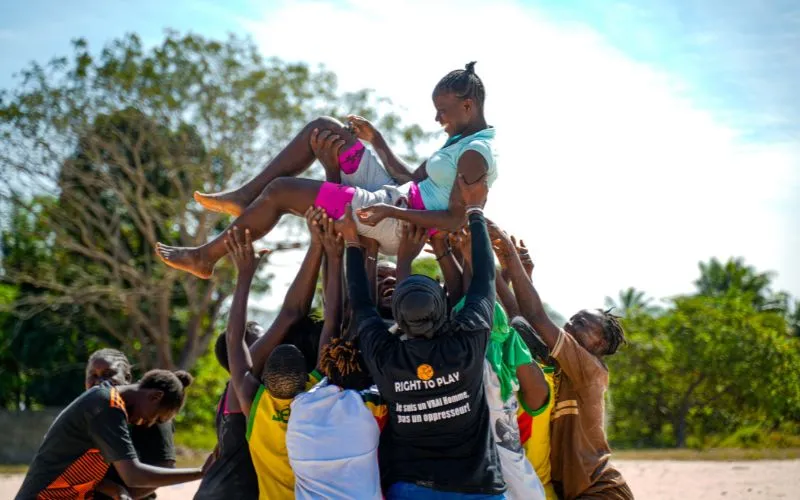
With structured coaching, safe spaces, and encouragement, Elisabeth’s confidence grew. Her strength and technique caught the attention of coaches. Soon, she was invited to an under-17 national talent identification session.
To represent Senegal internationally, Elisabeth needed nationality. Local authorities worked with her family to secure her civil registration. For the first time, she received official identification documents. She was naturalized as a Senegalese citizen and has since competed in national tournaments and international training camps in Europe, earning medals in Ziguinchor, France, and Morocco. She was also selected to represent Senegal at the Youth Olympic Games, Dakar 2026.
“I never imagined sport would give me an identity.”
From Belonging To Becoming
Her coach, Dieynaba, has watched her transformation over four years. From a determined beginner learning basic techniques, Elisabeth has grown into a confident leader who supports younger girls at the club. She mentors them and teaches them wrestling techniques. “In training, she gives her all,” her coach says.
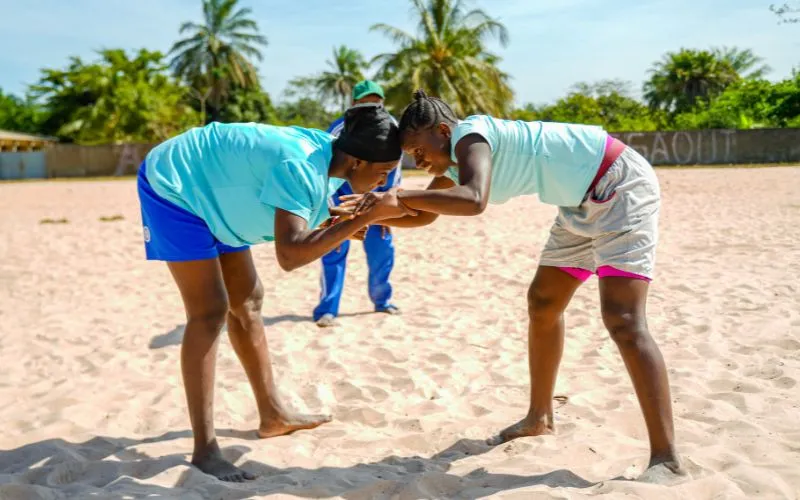
Elisabeth wants other girls to have what she found: a safe place to train, female coaches to learn from, and a voice in decisions about their lives. She’s advocating for practical changes—nearby facilities, safe routes, toilets at training grounds—that keep girls in sport.
“Sport gave me strength and a place to belong.”
The Renforcement des capacités des filles par le sport et le jeu (RECAF-Jeu) project, implemented by Right To Play with funding from Global Affairs Canada, empowers young people, especially girls, in Sédhiou and Ziguinchor, Senegal to build life skills, promote gender equality, challenge social barriers and lead through sport. To date, it has reached over 10,000 young people.
